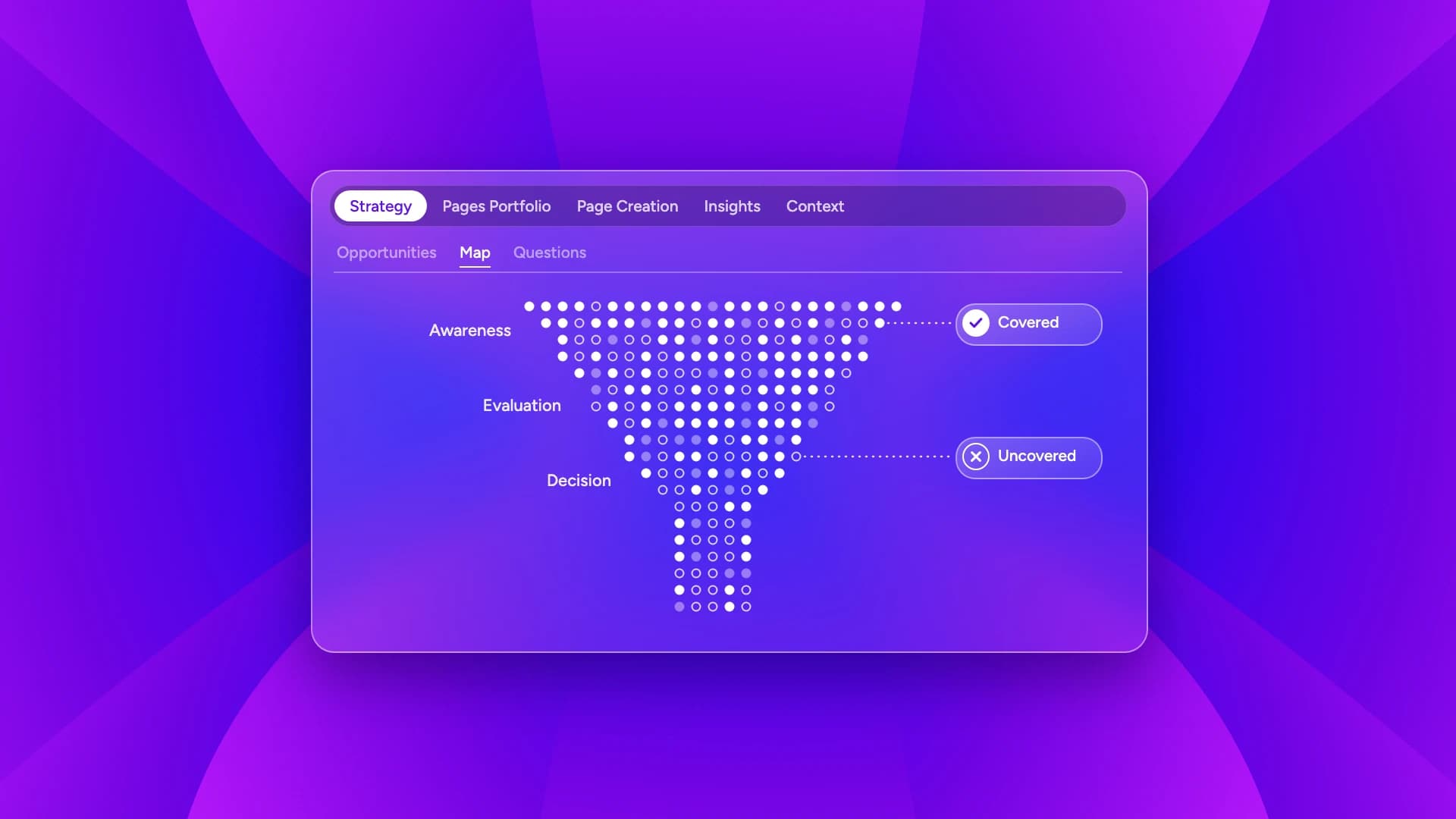
Today we’re launching the GrowthX Strategy layer, our biggest release since the full platform launched. At its center is the Question Map: a live view of the questions your buyers ask, where you and your competitors stand, and what content to publish next.
Most content strategies start with an outdated keyword or prompt list. Keywords alone don’t tell you what buyers need, where they are in their journey, or how your product fits. Prompt lists guess what buyers might ask AI without showing which questions matter. The best strategies connect your business context and product value to buyer needs, then use SEO, AEO, and competitor data to identify where you’re best positioned to win.
With strategy, data, and content workflows in one platform, you can go from a buyer’s question to a published page without leaving GrowthX. Every page becomes an opportunity to reach buyers through search and AI, turning their questions into compounding organic growth.
Why questions?
Buyers don't think in keywords or prompts. They have questions. They want to understand why something is happening, how to solve a problem, and whether a product will work for them.
A keyword or a prompt is just a record of how someone phrased that question one singular time.
Over the course of thousands of prompts, the wording may change, but the underlying question and intent does not.
A marketing leader might search Google for "organic traffic declining." Then ask ChatGPT, "Our organic traffic has been falling for six months even though we're publishing more content. What should I look at?" Or they might ask a colleague, "Do you think AI Overviews are hurting us?"
Those are all different ways to seek an answer, but they serve the same underlying question. The channel changes, but the question follows the buyer.
That's why tracking prompts to drive growth breaks down over time. Answer engines rewrite what a buyer types before they search, so tracking the exact prompt means measuring an input that the engine already discarded.
And adding more prompts doesn't fix it. A big prompt list can hold hundreds of ways to say the same thing, without addressing the whole buying journey. Prompt trackers can give you a score, and may even claim to allow content tools to produce targeted content drafts. But neither prompt trackers nor automated content systems show you which questions your buyers ask, where you stand with them against your competitors, and the exact actions you can take to claim their attention.
Prompts can't get you there, but questions do. Map them, and you can see where you already have a strong answer, where competitors are doing a better job, and where buyers care about something that no competitor in your category is actually explaining well. That's where your biggest opportunity to grow lies.
Meet your Question Map
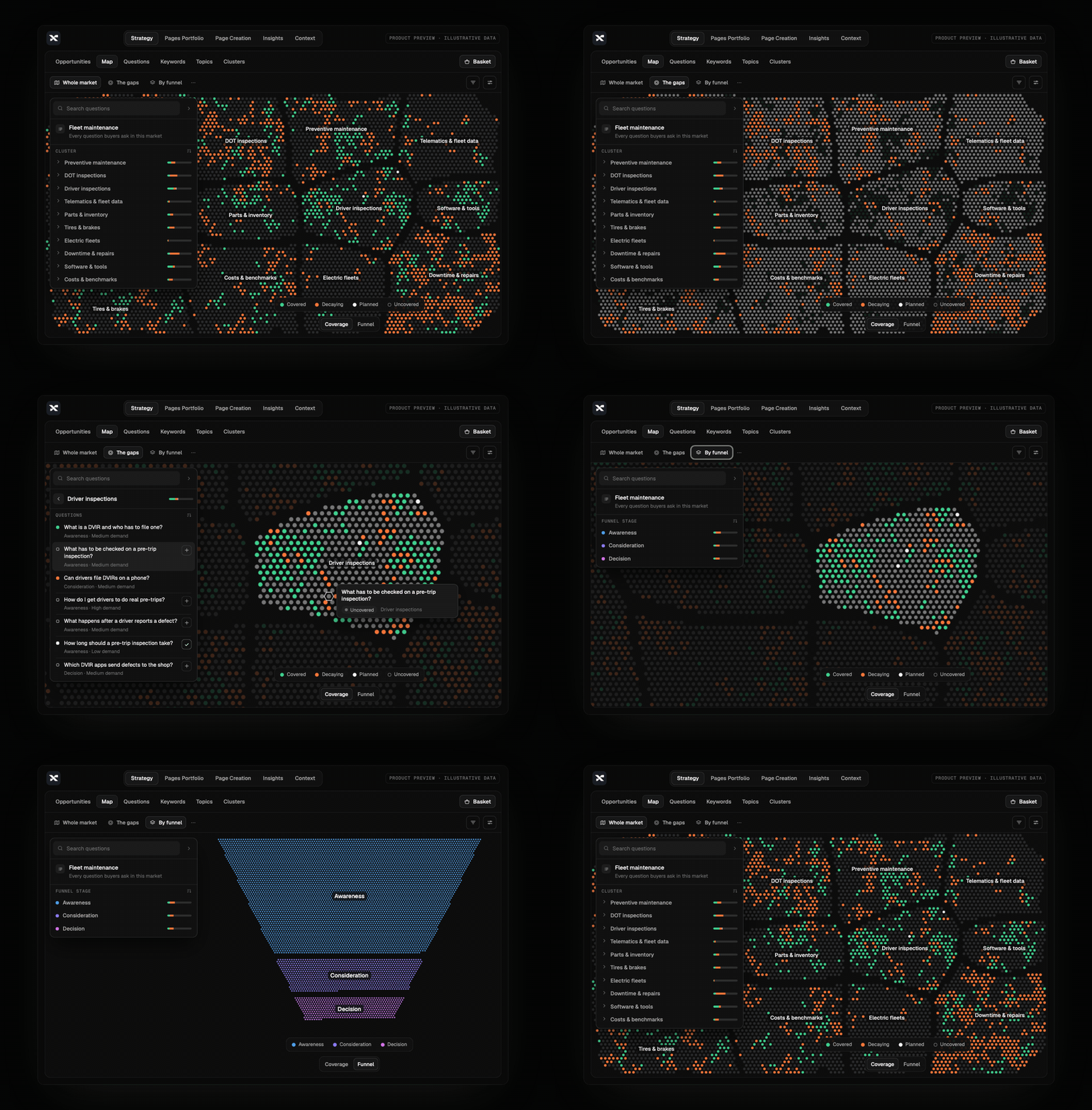
A question map shows you every question in your market, how you are answering each one, and what to do next to improve.
Can you build one by hand? Sure. We actually ran down how to do exactly that on our blog recently. But, in our experience, most teams who try end up with a spreadsheet that's out of date the day it's finished, because your market doesn't stand still.
Competitors publish new content. Buyers run into new emerging problems. Your own site changes. Even your internal business context can change. A question map of your market is only useful if it stays current in real-time.
That's exactly what we've built. Your question map isn't just comprehensive, it's alive. It stays up to date, built off of your current context and powering the workflows that help you make your next content call.
For each question the map tells you four things:
- Is the question yours to answer? How relevant it is to your audience, product and category.
- Can you win it? The demand behind it, how hard it is to rank, and who answers it today.
- Do you already answer it? Which of your pages touch it, and where the gaps are.
- What comes first? A priority rank, with clear rationales.
From the map to a published page
A map on its own doesn't grow anything. The value is in what you do with it, every week. That only works if two things are true.
First, the map has to reflect your market as it is today, not as it was the last time someone updated a spreadsheet.
Second, your strategy has to carry through to execution. Most teams research, plan, brief, draft, and publish in separate tools, losing context at every handoff. GrowthX keeps the buyer’s question, your business context, and the page’s goal connected from research through publishing. Once the page is live, you can track how well it answers that question and use the results to guide what you improve next.
It's a clear through line that helps you track performance at a page level for the first time.
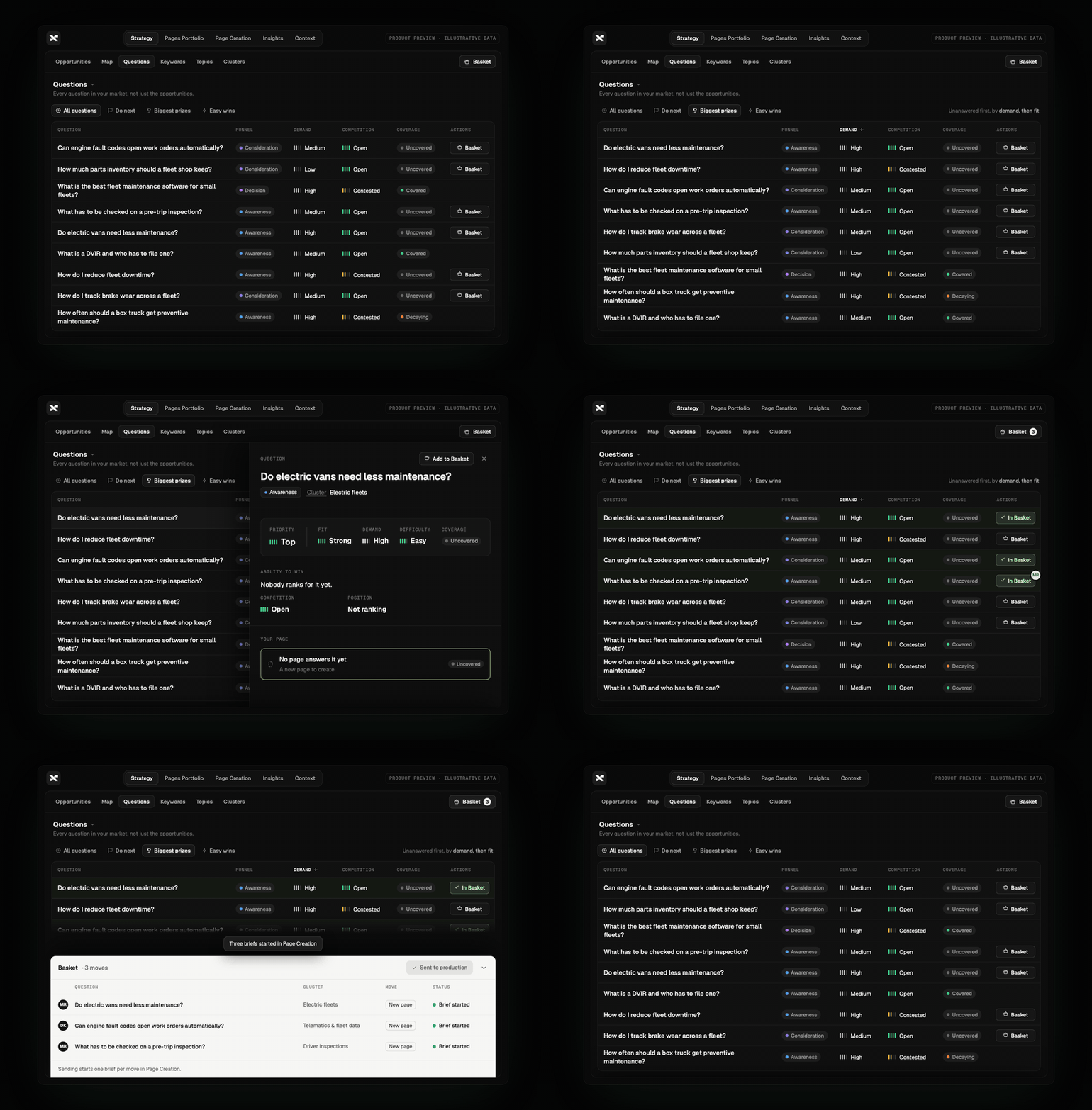
GrowthX proposes the pages worth making. It ranks every opportunity by priority, one question per proposal, so you always know what to work on next. Start with the biggest prizes, where the demand is, or the easy wins your team can ship this sprint.
You make the call. Open any question to see who ranks for it today, which of your pages already touch it, and why it made the list. Shortlist the ones you want and dismiss the rest.
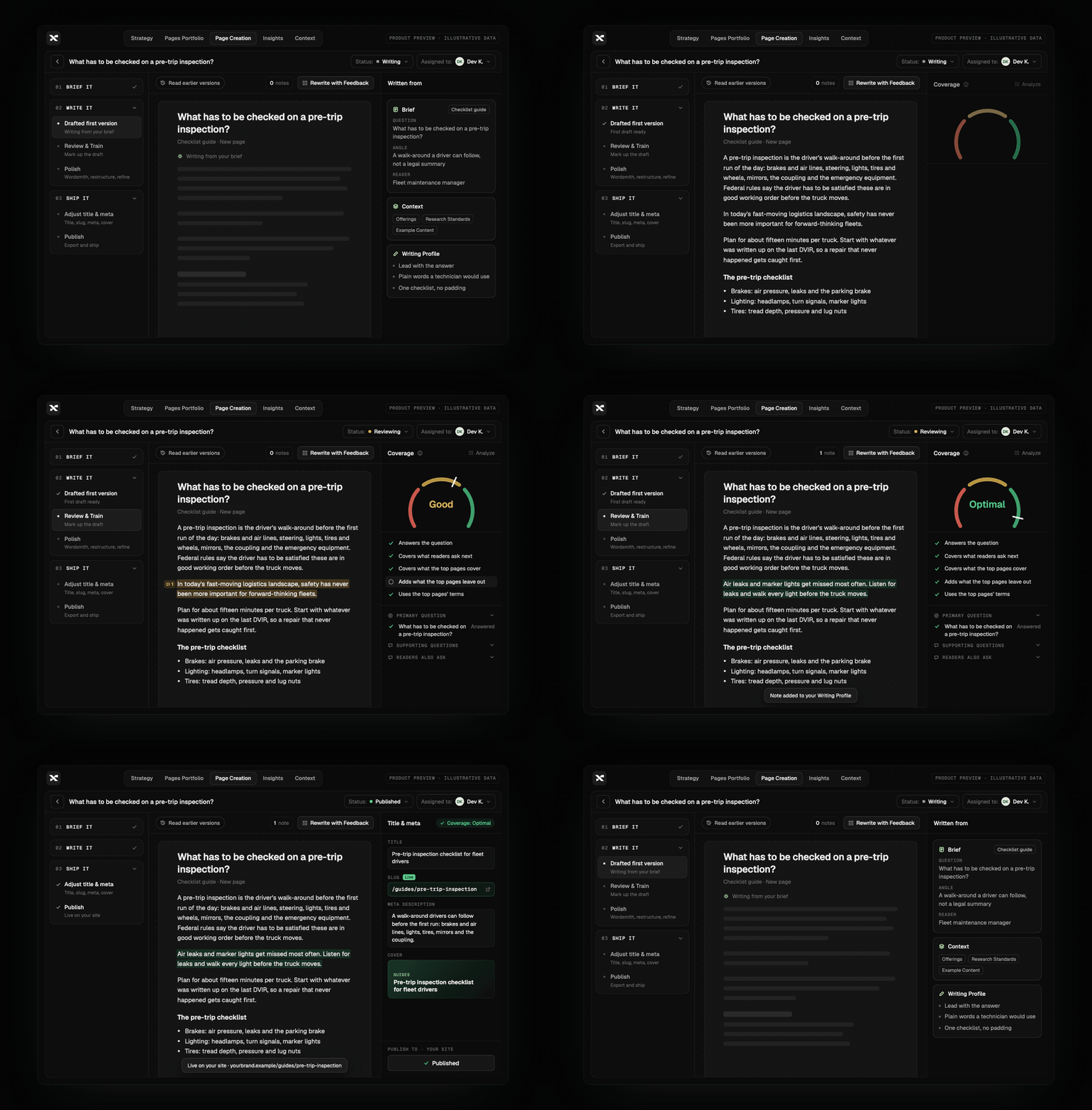
Send your shortlist to production. Pick a template for each page, and GrowthX turns it into a brief grounded in your company's context: your audience, your positioning and your voice. Drafting, review and publishing to your CMS all happen in the same platform.
Keep your map growing. When you learn something new from a sales call or a search trend, add questions from your own keywords, a list, specific pages, or lookalikes. Nothing reaches your map until you review it, so it always reflects how you see your market.
Built from how we've grown 100+ customers
We've powered organic growth for 100+ customers by running this method by hand. It worked, but it took a team of experts, a stack of tools and a lot of hours. Now the whole loop runs inside GrowthX, from the question to the published page. Our SEO, AEO and content experts set it up with you, then you run it, every week instead of rebuilding a spreadsheet every quarter.
Stop chasing keywords and prompts. Turn buyer questions into compounding growth.
See it in action
Strategy sits at the center of everything GrowthX does. Context gives it your company, audience, competitors and voice. Portfolio brings your SEO, AEO, traffic and page performance into one view. Strategy maps your buyers' questions, identifies the ones you can win, and suggests what to publish next. Action turns those decisions into briefs and content, with your team approving every page. Learning feeds the results back into your strategy, so every page makes the next move smarter.
One platform, one loop, from your buyers' questions to compounding organic growth.
Want to see your own map? Book a demo and we'll walk you through it.
Prefer to watch first? Marcel builds a question map live at our free virtual workshop on October 22. Everyone who registers gets the replay. And for more on how we think about AI visibility, read what AI visibility can actually tell you.