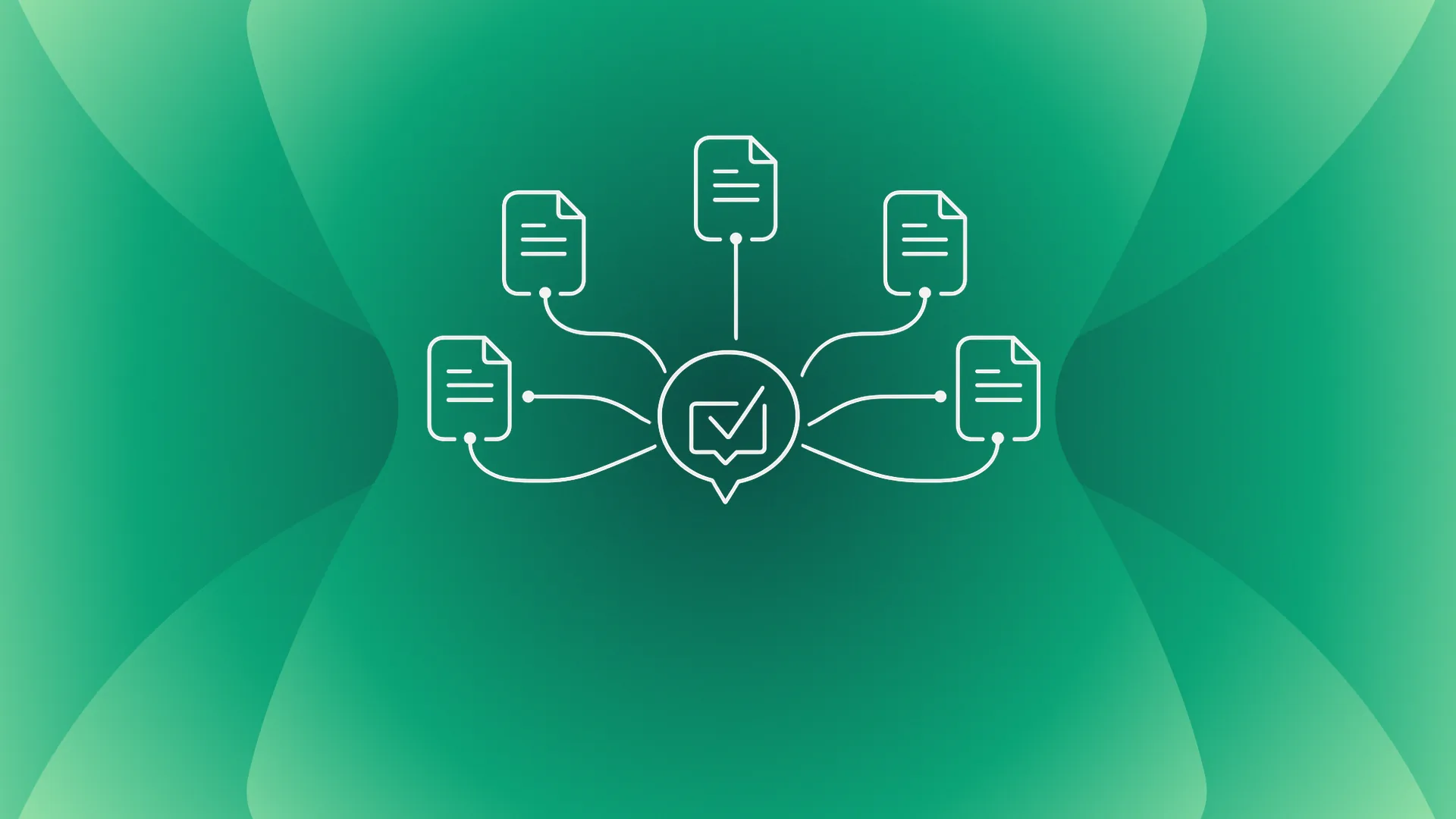
A buyer asks ChatGPT which tools to consider for a category you compete in. The model returns three names, describes each in a sentence, and cites four sources. Your brand isn't one of them, and there's no way to see the query, the answer, or the pages that fed it.
That answer shaped an opinion before anyone clicked a single link, and you have no idea why the model picked what it picked.
We live inside this problem. We track how sources get cited across the 5,800+ brands and 2.6M+ AI responses we monitor through CheckThat. Let's dive into how we've come to understand the mechanics of which sources an answer engine reads, ranks, and cites, and what actually moves your odds.
What citation selection means in AI search
AI search engines don't return ten blue links for you to choose among. They read the top sources themselves, write an answer, and attach a handful of citations to back specific claims.
The page a model cites is the page that shaped the answer your buyer reads. Everything it doesn't cite is invisible, no matter where it ranks in traditional search.
Perplexity is the clearest example of a tool built around this model. The company reported 780 million queries in May 2025, roughly 30 million a day. It renders answers as synthesized paragraphs with numbered [N] references pointing back to source pages, which makes the citation mechanics visible in a way blue-link search never was.
That changes how you think about visibility. Ranking on page one only gets you into the candidate set. Retrieval and ranking decide whether the buyer sees you at all, and separate signals govern whether the model reads your page and cites it.
How AI search engines select citations
The path from a typed question to a cited answer runs through four stages. The engine parses the query into intent, retrieves candidate documents, synthesizes an answer from them, and attaches citations to specific claims. Each stage filters what can appear, so let's walk through them in order.
Natural language query processing
The model reads a conversational question as intent and breaks it into subtopics. "Which observability tool works best for a small platform team" gets decomposed into related questions rather than matched against an exact phrase. This is called query fan-out, which issues many related searches at once across subtopics and data sources, then stitches the results into a single response.
That decomposition changes what content can win. A page answering one narrow phrase competes for far fewer of the sub-queries than a page that covers the full shape of the question.
Retrieval and RAG grounding
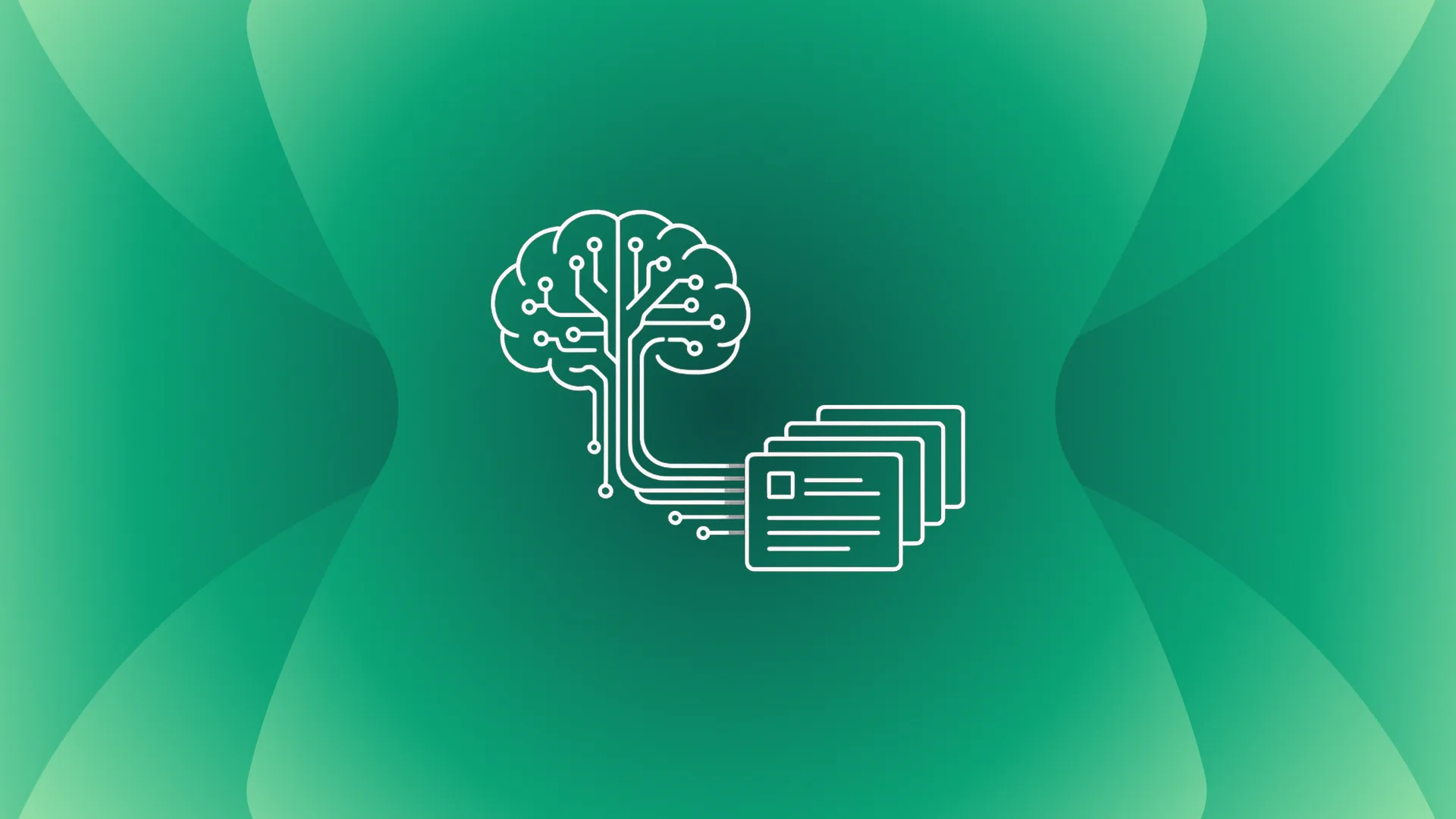
Retrieval-augmented generation, or RAG, is the technique that lets a model pull in outside documents at the moment you ask, instead of answering only from what it absorbed during training. The system finds relevant sources first and hands them to the model, so the answer is built on real material rather than memory alone.
Retrieval-augmented generation grounds the model's output in documents it pulls at query time, giving the system current source material beyond what it memorized during training. The 2020 paper that introduced RAG paired a pre-trained generator with a neural retriever over a dense vector index. A later RAG survey describes the modern pipeline in three stages. The system indexes documents into a vector store, retrieves the top-k chunks most similar to the query, then feeds query plus chunks to the model for synthesis.
Retrieval also reduces fabrication. RAG cut hallucinated responses by more than 60% versus non-RAG models in knowledge-grounded dialogue. The mechanism is simple. When the model has to build the answer from retrieved passages, it has less room to invent.
Semantic search and vector embeddings
Semantic search maps your query and candidate pages into a shared vector space through dense retrieval, then finds the nearest matches by meaning rather than exact words. At scale it uses approximate nearest neighbor algorithms like HNSW to search millions of vectors quickly.
Most production systems run hybrid retrieval, combining dense vectors with BM25 keyword matching, because dense retrieval alone can miss exact-match rare terms like a product name or an error code. The practical takeaway for content is that you need to earn both semantic relevance and exact-term coverage, because retrieval leans on both.
How the model chooses which sources to cite
Once retrieval has gathered candidates, the ranking layer weighs relevance, authority, structure, and freshness. The strongest signals sit above the page itself, and the research is consistent on where they sit.
- Domain authority dominates. A study of 18,000+ pages found domain-level factors account for 77% of predictive importance for AI citations, with page-level factors at 23%. A separate analysis of 2 million citations found AI-perceived domain authority roughly 6x more influential than the strongest individual page-level feature.
- Google organic rank acts as a gate. A top-3 ranked page is 7.82x more likely to be cited than a page ranked 11–30. But the gate is loosening. The share of AI Overview citations from top-10 organic pages dropped from 76% to 38% over seven months, and more than 80% of citations from ChatGPT, Gemini, and Copilot come from pages that don't rank at all for the target query.
- Freshness matters at the margin. AI-cited content averages 1,064 days old versus 1,432 days for organic top-10 results, roughly 25.7% fresher.
What makes content citation-worthy
Authority earned across many sources beats one perfectly optimized page. Branded web mentions correlate 0.664 with AI Overview visibility while backlinks correlate only 0.218. Earned media distribution can increase AI citations by up to 325% versus publishing only on your own domain, so a small set of authoritative sources absorbs most of the citations.
Structure is the second lever, and here the evidence is more direct. Clear positive correlations link AI citation rates to specific formats:
- Clarity and summarization: +32.83%. Pages that state the answer plainly and summarize it up top get cited more.
- Q&A format: +25.45%. Content organized as explicit questions and answers maps to how buyers phrase queries.
- Section structure: +22.91%. Clear headings help models find the passage that answers a sub-query.
The same pattern shows up in format. One 55M-dataset analysis found numbered and bulleted lists with 4+ items cited 67% more often than unstructured content, and an analysis of 10,000 Perplexity queries found expert quotes boosted page visibility by 40%.
Schema markup is where the evidence splits, and this is the term most AEO advice oversells. That same 55M-dataset analysis reports schema presence gives a +34% citation probability, but a controlled causal experiment tracking 1,885 pages that added JSON-LD schema between August 2025 and March 2026 found no major citation uplift on any platform.
The controlled experiment carries more weight. Schema alone is unlikely to move citations, though it may co-occur with the structured content and entity data that do. Named authorship is more defensible. One 3,200-query audit reported a 2.4x lift in citation share from named authorship with schema and verified sameAs links, rising to 4.1x when the author had a Wikipedia entry, though that one is an industry-blog audit, not peer-reviewed.
How citation behavior differs across engines
Citations barely overlap across engines, which means an AEO strategy tuned for one platform doesn't transfer to the next. A 2,000-keyword analysis found pairwise domain overlap of 25.19% between Perplexity and ChatGPT, 21.26% between Google AIO and ChatGPT, and 18.52% between Perplexity and Google AIO. Across surfaces, the lowest overlap between any two is 16% and the highest is 59%.
Each platform runs a distinct crawler, retrieval backend, and trust filter, so the citation pools differ. The architectures diverge in ways worth knowing:
- Google AI Overviews run parallel to the organic ranking stack with query fan-out and passage-level Gemini re-ranking. Overlap with traditional organic rankings sits around 54% overall, but overlap between AI Overviews and AI Mode is only 13.7% despite answers being 86% semantically similar. Site owners can opt out through Search Console, which removes traffic and impressions from generative features.
- Perplexity operates as a hybrid RAG system, combining BM25 for term-level queries with dense embedding retrieval, followed by multi-layer ML ranking. It is the outlier for organic alignment. 28.6% of its cited URLs land in Google's top 10, versus roughly 8% for ChatGPT, Gemini, and Copilot, with 91% domain overlap and 82% URL overlap with Google's top-10 organic.
- ChatGPT Search triggers live retrieval conditionally, searching "when it decides the question needs it" rather than on every query. When it skips retrieval, it answers from training data, and the citations you could influence never appear.
Google's AI answers ride on an index and ranking stack you already know, while dedicated engines run their own crawls and trust filters where citation depends less on your Google rank.
Where citation selection breaks down
AI search engines cite confidently and often wrongly, and that's the risk your buyers carry into your category without knowing it. Eight generative search tools tested across 1,600 news queries collectively gave incorrect answers to more than 60% of them. Grok-3 hit 94%, Perplexity 37%.
The root cause is that models can generate from confidence without grounding every claim in fact. A 2024 study found up to 57% of citations were post-rationalized, meaning the model writes the answer first, then finds a source to attach.
That inverts the intuition behind AEO. It suggests that being the most-cited authority on a topic across the web matters more than any single structural tweak, because the citation often follows the answer rather than driving it.
Linkbacks fail too. Across ten models in a 2026 study, 3–13% of citation URLs were hallucinated, with no record in the Wayback Machine, and 5–18% were non-resolving overall.
For your own category, pull the cited source and check whether it supports the claim, then run the same buyer-intent prompts repeatedly rather than trusting a single answer. Accuracy on news and time-sensitive topics runs far lower than on structured questions, so weight your checking toward the volatile queries.
Turning citation mechanics into AI visibility
You can't improve what you only see once. A single ChatGPT answer tells you nothing. The same prompt, run across a week and across ChatGPT, Claude, Perplexity, and Google AI Overviews, tells you whether your brand shows up reliably and how it gets described.
We track this on four dimensions:
- Presence. Whether your brand appears in AI-generated answers at all.
- Reputation. How the answer characterizes and positions you.
- Perception. The sentiment and framing the model applies.
- Influence. The degree to which you shape the category narrative rather than appear as a footnote.
Measurement is the start, but closing the loop is the work. When a competitor wins citations on a buyer-intent prompt you should own, the fix starts with knowing which engine cited which source, what claim it supported, and how often the pattern repeats.
That is the loop the GrowthX platform runs for you. It tracks your brand across ChatGPT, Claude, Perplexity, and Google AI Overviews on those four dimensions, benchmarks you with CheckThat data drawn from nearly 200 categories, 5,800+ brands, and 2.6M+ AI responses, and traces each citation back to the engine, the source, and the claim it supported, so you know which page to fix instead of guessing. If you want that loop running for you rather than auditing answers by hand, book a demo. Engagements start from $6,000/mo.