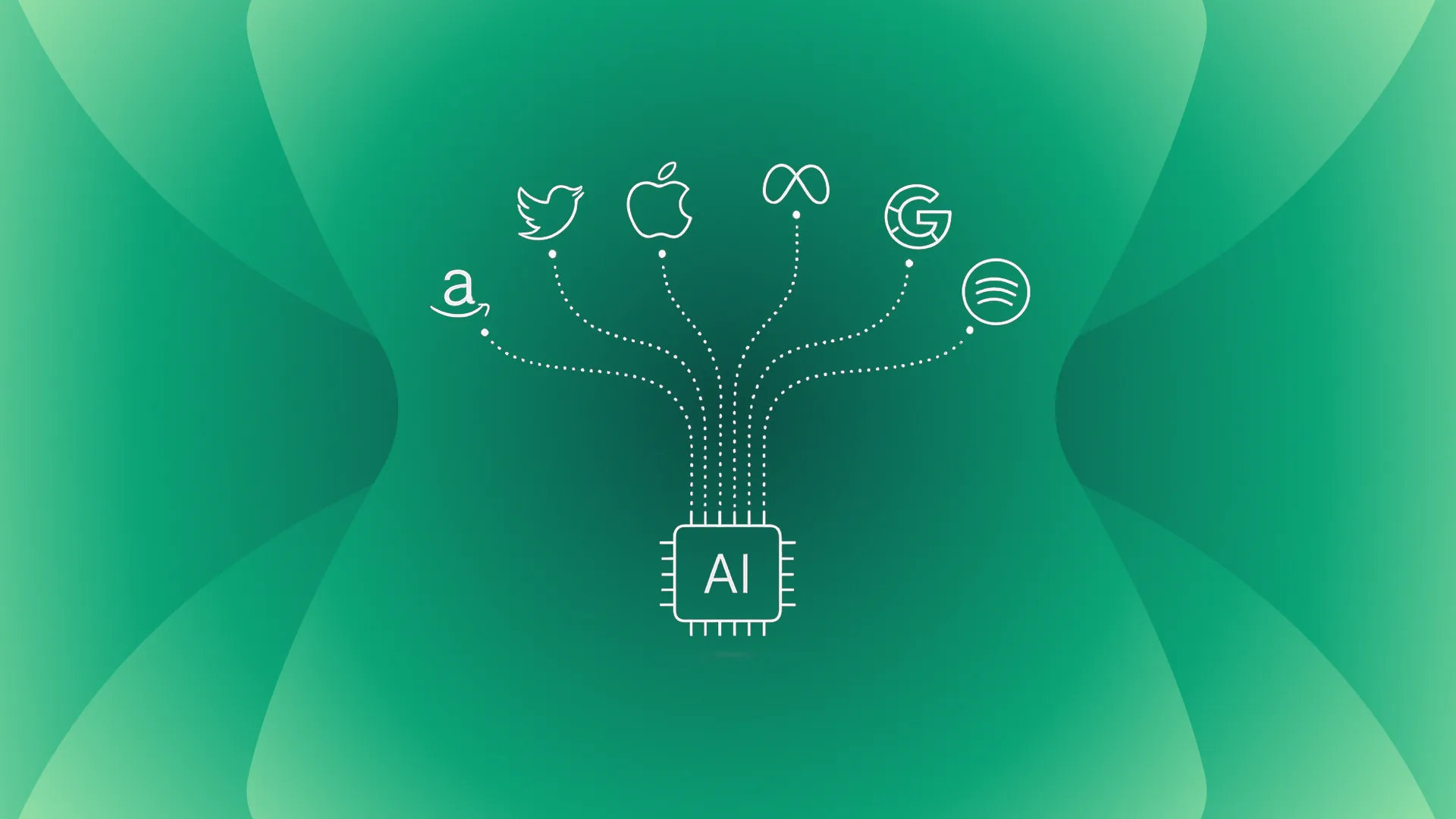
A competitor with half your backlink profile keeps showing up in ChatGPT's answers when buyers ask for tools in your category, and you don't. We've watched teams throw link-building budget at that gap for months without moving it, because AI answer engines weigh how often the web talks about a brand near its topic far more than how many links point at it. Most of those mentions never carry a link. Unlinked brand mentions, the ones classic SEO treated as unfinished outreach, turn out to be the raw material AI answers get built from. The mechanism has a name, branded co-occurrence, and we think it's the most underpriced lever in AI visibility right now.
That linked guide covers the broad visibility playbook. This piece goes deep on the mechanism, and this time we'll walk the audit with you step by step.
Here's how mentions become citations, and how to build yours on purpose.
The three kinds of brand mentions
Before the mechanism, the vocabulary. When practitioners talk about brand mentions and SEO, they're usually mixing three different things, and the distinction decides what you should build.
- Linked mentions — your brand name appears with a hyperlink back to your site. Classic SEO currency, and the kind your backlink tools already count.
- Unlinked brand mentions — your name appears in text with no link attached. The old playbook treated these as half-finished links, outreach targets waiting for an email.
- AI mentions — your brand appears inside an AI-generated answer, named as a recommendation or grouped with competitors. This is the output the other two produce.
The old hierarchy put linked mentions on top because PageRank runs on links, and the SEO value of a mention was mostly conditional on converting it. AI engines rearrange that hierarchy. Language models read text rather than link graphs, so an unlinked mention on a trusted page teaches the model much of the same association a linked one does. The rest of this piece explains why, and what to do about it.
What is branded co-occurrence?
First, a definition. Branded co-occurrence is the repeated proximity of your brand name and your target topic terms in text across the web. When "your brand" and "expense management" appear near each other in thousands of documents (review sites, forum threads, comparison posts, news coverage), language models learn to associate the two. The old linguistics maxim holds that a word is known by the company it keeps. LLMs operationalize that idea at industrial scale, and your brand name is one of the words.
Notice that nothing in that definition requires a link. Co-occurrence is why the unlinked mention, the kind link-builders used to shrug at, carries real weight in AI search.
Practitioners often conflate co-occurrence with a neighboring concept, co-citation. The two get earned differently, so the distinction is worth two minutes.
Co-occurrence vs. co-citation
Co-occurrence is a text-internal relation. Two terms appear near each other within the same document. Co-citation is a network relation, a term borrowed from 1970s bibliometrics, where it described two documents being referenced together by a third source. One requires proximity in prose. The other requires a third party mentioning both of you.
SEO practitioners have muddled the two for over a decade, and frankly the confusion is understandable, since both describe your brand showing up in good company.
For a product marketer, the practical split is that co-occurrence is directly buildable. You can place your brand name beside category terms through PR, original research, and community presence, then reinforce the association with structured content on your own site. Co-citation (getting listed alongside specific competitors in roundups and comparisons) tends to follow from the same underlying association. A listicle author decides you belong in the set because that association already exists in what they've read. Work the co-occurrence lever first, and co-citation compounds behind it.
How mentions turn into AI answers
The mechanism operates at two distinct moments. Models learn brand-topic associations at training time, and answer engines retrieve live content that re-exposes those associations at query time. Understanding both tells you where to invest.
First, the training side.
How LLMs learn brand-topic associations
Language models encode meaning from distributional patterns. Which words appear near which other words, how often, across billions of documents. Word embedding research established decades ago that co-occurrence within a context window is the raw material of learned association, and transformer models inherit that same foundation at far greater scale.
For brands, the consequences are measurable. Language models carry a documented co-occurrence bias. They tend to prefer answers built from word pairs that appeared together frequently in training, and they have trouble recalling facts whose subject and object rarely showed up near each other in the training data. In marketing terms, if your brand and your category rarely share a page, the model has little reason to connect them when a buyer asks.
A handful of mentions won't move a model, either. The associations that surface in answers come from sustained, repeated proximity across many documents, which is why this works as a standing program rather than a one-quarter campaign.
We'll add one caveat here, and we'd frame it as our operating thesis rather than settled science. Raw mention volume seems to do its best work on simple category questions (who are the vendors in this space), while the multi-hop reasoning behind a detailed comparison answer leans harder on explicit, well-structured facts about what you do and for whom. You want both layers, so build mention volume and factually explicit content together rather than betting on either alone.
Pre-training vs. retrieval
Some AI answers draw on baked-in training data. Others use retrieval-augmented generation, or RAG, which simply means the engine pulls live web content at query time and composes its answer from what it fetched. Engines differ sharply in how much they rely on it.
A 2026 study measured the retrieval footprint per response:
- ChatGPT without search — retrieves zero URLs and answers from memory.
- Gemini, GPT-Search, and Google AI Overviews — average roughly 4.5 to 5.8 retrieved URLs per response.
- Perplexity Sonar — averages 8.66 URLs and runs a web search before every answer.
Google also grounds AI Overviews in its core Search index and issues concurrent fan-out queries per question, so your classic index presence still feeds the answer layer.
This changes which signals matter where. For retrieval-heavy engines, your mentions need to live on pages those engines fetch today, meaning recent, indexable pages with specific claims. For parametric answers, where ChatGPT responds from memory, the association had to exist in training data months ago. The tactical implication is uncomfortable for anyone hoping for a quick fix. Mentions you earn now show up faster in retrieval-heavy engines, then compound again on the next training cycle. Waiting means missing both windows.
Why unlinked mentions beat backlinks
Across 75,000 brands, branded web mentions, linked or unlinked, correlated with AI Overview visibility at 0.664, a strong relationship as these studies go. Domain Rating came in at 0.326 and raw backlink count at 0.218. In plain terms, how often the web talks about you next to your topic predicted AI visibility about three times better than how many links point at you.
We'd flag the epistemics here the same way we'd want them flagged for us. These are correlations, not proof of mechanism, and nobody outside the engine teams can see the weights. But the direction is consistent across the studies we've read, and it matches what the training-data research above would predict. The mention carries the signal, and a link mostly strengthens the source trail behind it.
The corroboration we want to add here is first-party. CheckThat, the AI visibility platform we operate, tracks brand mentions and citations daily across the categories it benchmarks, and once that dataset is cleared for publication we'll put the mention-to-citation numbers right here in this piece. We'd rather show you the chart than ask you to take the setup on faith.
Mention share also skews hard toward incumbents. Within any category, a small set of brands captures most of the mentions and everyone else fights for scraps, which is exactly why we treat mention-building as a budgeted operating motion rather than a nice-to-have.
Run the 20-prompt mention audit
Everything above explains why mentions move answers. Now let's measure yours, because whatever program you build next should start from what the engines already believe about you. The audit is honestly an afternoon of work, needs nothing beyond the engine subscriptions you already have, and produces the placement list your next quarter of PR and content should aim at.
Build the prompt set
Twenty prompts is enough to see the pattern without turning the audit into a project. Write them the way buyers actually type, and pull the language from sales calls, support tickets, and the questions your AEs hear on demos rather than from your keyword tool.
We build the set from four groups of five:
- Category discovery — "best expense management software for mid-market companies," "top tools for automating employee expense reports." The who-are-the-vendors questions.
- Comparison and alternatives — "alternatives to [the incumbent everyone knows]," "[competitor A] vs [competitor B] for a 200-person company." Prompts that name competitors show you whose consideration set you're in.
- Problem-first — "how do I stop chasing receipts from my sales team every month." Buyers with a pain and no vendor vocabulary yet. These answers matter most, since the buyer has no shortlist to defend.
- Fit and validation — "is [your brand] good for companies with heavy international travel," "who shouldn't use [your brand]." The only group where your brand appears in the prompt. It tests how engines describe you rather than whether they find you.
Run it across three engines
Run all 20 prompts through ChatGPT, Gemini, and Perplexity in one sitting. Use fresh chats with no custom instructions and no memory of your earlier prompts, because a session that already knows where you work will flatter you. Log answers the same day you collect them, since a table assembled across three weeks blends three different snapshots.
What to record
One spreadsheet row per answer, 60 rows total. Record:
- Prompt and engine — so you can slice by either later.
- Did you appear? — yes or no. The base rate everything else hangs off.
- Your role in the answer — the lead recommendation, one option among several, or a passing aside. Position tells you more than presence.
- Brands named alongside you — every competitor in the answer, whether you appeared or not. This becomes your co-mention set.
- How the answer describes you — the actual phrase, copied verbatim. "Legacy expense tool for large enterprises" and "modern spend platform" can come out of the same question.
- Sources cited — every URL the engine surfaces, when it surfaces any. These pages are where your co-occurrence currently lives, or doesn't.
How to read the results
Read the table in four passes.
Start with your appearance rate on the fifteen prompts that don't name your brand, counted separately per engine, because the engines genuinely diverge. In one analysis of 3.7 million citations, 91.07% of cited URLs appeared in only one engine, and just 2.37% showed up in all three. A strong showing in Perplexity next to a blank in ChatGPT is normal, and it tells you which engine's source pool you're missing from.
Next, tally the co-mention set. List every brand that appeared in three or more answers, then put your actual competitive set beside it and read the gaps. Brands the engines include that you'd never pitch against are the market as the training data remembers it. Brands you fight in every deal that the engines omit are earning their associations somewhere you're not watching.
Then read the description column out loud. If the verbatim phrases describe the product you shipped two positioning cycles ago, you've found stale source material, and the pages in your sources column are usually where it lives.
Last, count the source domains. Any third-party page cited more than twice that mentions your competitors without mentioning you goes on a placement list. That list is the audit's real deliverable, next quarter's PR targets ranked by the engines themselves.
Rerun the same set monthly and keep the prompts stable, since deltas only mean something against a fixed baseline. Version the set when your category vocabulary genuinely shifts, and note engine model updates as you go, because citation mixes can swing within weeks of one.
What your co-mention set reveals
The co-mention column deserves its own discussion, because it's the audit read that surprises people most. Engines don't just decide whether you appear. They decide who you appear with, and over time that grouping shapes how durable your topical authority becomes.
How AI engines group brands into comparison sets
Engines cluster brands into peer sets, and those sets are stickier than you'd like. Ask three engines who competes in your category and you'll often get overlapping rosters that read like the market as it existed a few years ago, because that's the corpus the associations formed in.
The grouping behavior varies by category. Engines agree heavily on which brands belong in transactional categories, with 97% pairwise brand-mention overlap in retail and 94% in travel, but they diverge in research-heavy ones, down to 71% in finance and 60% in healthcare. If you sell into a transactional category, the consideration set is nearly fixed across engines and breaking in is a volume game. In research-heavy categories, each engine's set is contestable separately, which is better news for challengers.
If your audit shows ChatGPT grouping you with two legacy vendors you displaced years ago, that's a co-occurrence problem in the sources it learned from, and it's fixable.
Entity consistency and topical authority
Consistent co-occurrence with a topic cluster compounds into what engines treat as authority. The entity layer formalizes it. Knowledge graphs encode brands, products, and people as entities with explicit relations between them, and AI systems lean on those graphs as factual grounding to reduce hallucination.
The practical takeaway is to use one canonical brand name, one product name, and one category phrasing everywhere you show up. Variant naming fragments the co-occurrence signal across multiple weak entities, so the model ends up with three faint associations instead of one strong one. The entity layer and the co-occurrence layer reinforce each other, and neither substitutes for the other.
How to earn brand mentions deliberately
Waiting for mentions to accumulate organically cedes the category to whoever is manufacturing them. A deliberate mention-building program has four working parts.
Digital PR, original research, and owned data
The goal is placing your brand name adjacent to target topic terms at scale, on pages engines trust. Third-party placement matters more than your own site. In one analysis of 102 brands across five engines, brand-owned domains received 2.9% of citations while third-party sites took 75.2%, and ranked listicles alone accounted for 35.7% of classifiable citations.
The playbook that follows:
- Original research and data — proprietary numbers get quoted, and every quote places your brand name next to the topic on someone else's trusted page. In our experience this is the single highest-yield co-occurrence asset a content team can produce.
- Comparison and listicle placement — if listicles dominate citations, being absent from the top roundups in your category is a structural visibility gap worth budget.
- Consistent entity naming — the same canon everywhere, per the entity section above. PR placements written with three different product names build three weak signals.
When a placement lands as an unlinked mention, you can still run the classic outreach play and ask for the link. Just treat the link as the bonus, because the mention did the AI-side work the day it published.
Reddit and third-party communities
Reddit is disproportionately weighted in both training data and retrieval. Google licenses Reddit data for about $60 million per year, and OpenAI struck its own Reddit partnership in 2024. Reddit-derived text is also heavily represented in the best-documented open training corpora. On the retrieval side, Reddit accounts for 46.7% of Perplexity's top-10 citation share.
Before you spin up a Reddit motion, two cautions apply. Citation-source mixes swing sharply with model updates, sometimes within weeks, so treat any single platform as a channel rather than the foundation. And astroturfing gets caught. The durable play is legitimate presence in the subreddits where your category gets discussed, plus content worth referencing when threads compare vendors. Notably, the community threads engines cite tend to be older, low-drama Q&A posts rather than viral moments, which means the long tail of honest answers matters more than any splashy thread.
Structured data and schema
Schema markup makes entity relationships explicit rather than statistical. AI Overviews cited schema-marked pages 2.3 times more often than unstructured ones in an analysis of 1,000 AI Overview answers. A few properties do most of the work:
Organization— on your homepage or About page, establishing the entity itself.sameAs— linking your entity to Wikipedia, Wikidata, and LinkedIn to disambiguate identity.aboutandmentions— connecting each piece of content to the topics it covers.
Schema confirms for crawlers that the associations they're inferring from your text are the ones you intend. It's cheap, it's shippable in a sprint, and it's the part of this playbook your technical SEO can own outright.
Avoiding negative co-occurrence
Co-occurrence cuts both ways, because if your brand repeatedly appears next to a low-quality competitor, a deprecated category term, or outdated positioning, engines learn that association just as efficiently.
This failure mode hides well, because engines often cite a source without naming the brand anywhere in the answer text. Your AI citation dashboard can look healthy while the actual answer language groups you with the wrong peers or describes you in a competitor's framing. The description column in your audit exists for exactly this reason.
The fix is monitoring answer text, not citation counts alone. When a mischaracterization appears, trace which source pages the engine draws from and publish content that corrects the association at the source. Retrieval-heavy engines may reflect the fix within weeks.
How mentions fit into your SEO and AEO work
Building mentions is one layer inside AEO, and it sits on top of the search work you've already done. Google has been consistent in public statements that its AI search features run on the same core indexing and ranking systems as classic search, and that matches what we see operationally at GrowthX. Strong SEO fundamentals produce strong AEO results, and the teams winning AI citations are the ones whose crawlability, content quality, and entity hygiene were already sound. The real differences between AEO and classic SEO sit mostly in the unit of optimization, since SEO ranks pages while AEO gets your brand selected into generated answers. Co-occurrence is the layer SEO rarely measured, extending the layers SEO already built.
Tracking mentions across AI platforms
You can't manage an association you never measure, and click data won't help you here because the measurement unit is the prompt. The 20-prompt audit is the manual version. For a standing program, track mention frequency and citation quality across ChatGPT, Gemini, and Perplexity, and review response positioning separately, because it tells you whether you're the recommendation or the also-mentioned.
Measure per engine, because as the consensus data above shows, signals don't transfer between them. We built CheckThat, our AI visibility measurement platform, for exactly this job. It benchmarks nearly 200 B2B software categories, 5,800+ brands, and 2.6M+ AI responses, tracking daily brand mentions, sentiment, and citation sources across ChatGPT, Claude, Perplexity, and Google's AI surfaces. The pre-built category prompt library matters here, because measuring against the prompts real buyers use beats guessing at your own.
Why the timing matters
The attribution gap is going to get worse before tooling closes it. Recent data shows 68% of Google searches end without a click, and AI summaries depress clicks on the results below them. The buyer forms an opinion, shortlists two vendors, and never touches your analytics. Your mention footprint determined whether you were one of the two.
That's why the timing argument matters more than any single tactic. Mention share concentrates in a few brands per category, associations take sustained volume to stabilize in training data, and incumbency compounds on every cycle. Every quarter you delay, the leaders in your category bank more of the association you'll eventually have to displace.
If you want a place to start this week, the 20-prompt audit above is it. One afternoon tells you your appearance rate, your co-mention set, and the pages your next quarter of PR should target.
The harder operational problem is that mention-building spans functions that usually don't share a system. PR earns the mentions, content builds the topical cluster, technical SEO ships the schema, and someone has to watch the answers to know whether any of it worked. The GrowthX platform closes that loop. Context holds your entity and competitive map, Creation produces the content that builds topic proximity, and Insights reports what engines are saying about you, feeding it back into what gets published next. If your team is tracking AI answers in one tool and producing content in another with nothing connecting them, book a demo and see the loop closed. Engagements start from $6,000/mo.